If you are looking for waterfront living in Miami, Bay Point stands out for a simple reason: it offers a private, low-density residential setting by the water while staying close to some of the city’s best-known lifestyle destinations. For many buyers, that mix of privacy, boating potential, and central location can feel hard to find. This guide will help you understand what Bay Point is, how its waterfront lots differ, and what matters most before you buy. Let’s dive in.
Where Bay Point Sits in Miami
Bay Point is part of Miami’s Upper Eastside. The City of Miami places the Upper Eastside north of NE 37th Street to NE 87th Street and east of NE 4th Court to Biscayne Bay, and it specifically identifies Bay Point as one of the neighborhoods east of Biscayne Boulevard on or near the bay.
That location helps explain Bay Point’s appeal. You are in a close-in Miami neighborhood with direct ties to Biscayne Bay, but the setting reads more like a residential enclave than an urban district. City materials describe Bay Point as an exclusive residential community by the water.
Bay Point’s History and Layout
Bay Point is not a new development. Miami-Dade County records show the Bay Point subdivision plat was recorded on October 23, 1940, with Biscayne Boulevard forming the west boundary and Biscayne Bay the east boundary.
The interior layout is important if you are evaluating waterfront value. County records note that many interior lots abut a canal connection to Biscayne Bay known as Sabal Lake or Horseshoe. That means Bay Point’s waterfront story is not limited to open bay lots alone.
Bay Point Feels Like an Estate Enclave
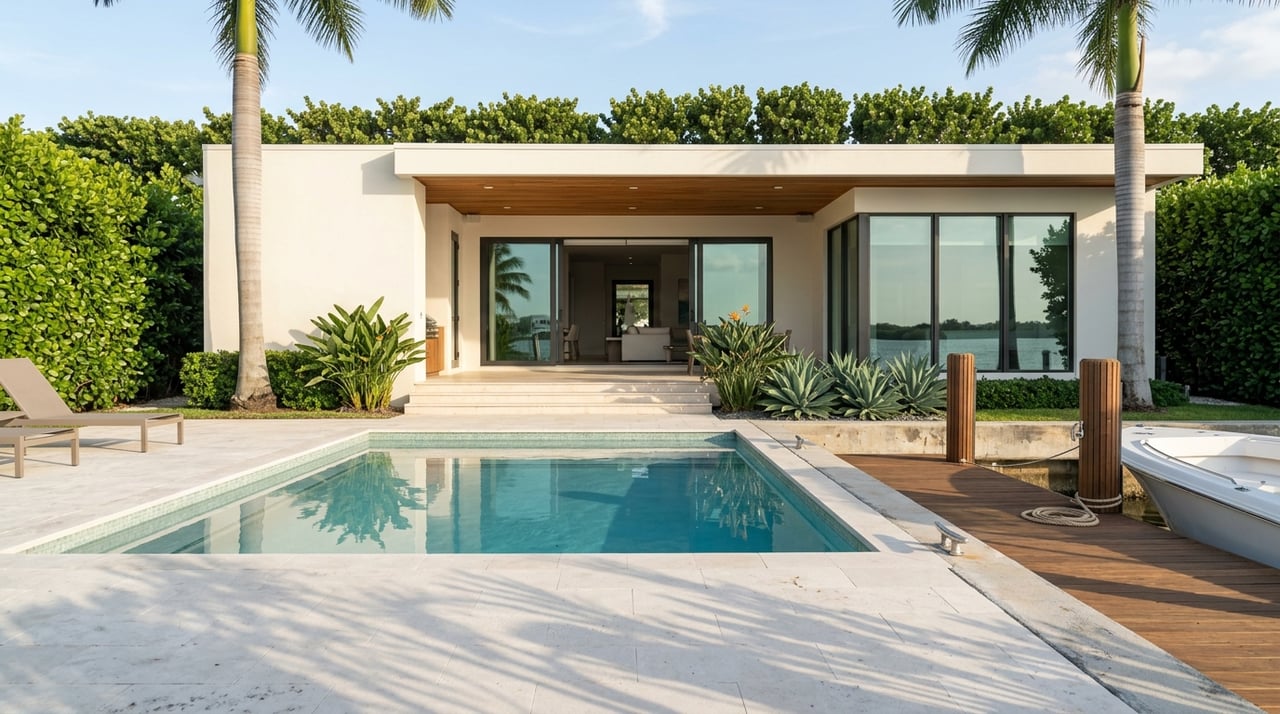
Bay Point is primarily a single-family neighborhood, not a condo district or mixed-use waterfront area. County hearing materials describe Bay Point parcels as single-family residences with features like marginal docks and seawalls, which supports its identity as a low-density residential area.
For you as a buyer, that changes the experience. Instead of focusing on shared building amenities, you are usually evaluating lot position, privacy, water access, and the condition of the home’s waterfront improvements. In Bay Point, the parcel often matters as much as the house itself.
Bay Point Lot Types Explained
One of the best ways to understand Bay Point is by looking at the main lot types. County records support three practical categories.
Bayfront Lots
Bayfront lots sit directly on Biscayne Bay. These properties tend to offer the most open water orientation and some of the clearest waterfront identity in the neighborhood.
If your goal is a true bayfront setting, these are usually the lots you will want to study most closely. The tradeoff is that each property can have very different shoreline conditions, dock setups, and exposure considerations.
Canalfront Lots on Sabal Lake
Many Bay Point homes are positioned along the internal Sabal Lake and canal system that connects to Biscayne Bay. These lots still deliver a strong waterfront lifestyle, but the water experience depends on the exact parcel and its placement along the internal waterways.
County records say the waterways connecting Sabal Lake with Biscayne Bay are dedicated to the owners of the lots that face and abut them. That makes canalfront ownership especially tied to the specific property you are buying.
Interior Dry Lots
Not every home in Bay Point sits directly on the water. Interior dry-site lots are still part of a water-oriented subdivision, but they do not have the same direct waterfront rights or improvement issues as bayfront or canalfront properties.
For some buyers, that can be a plus. You still get the neighborhood setting and location while avoiding some of the added maintenance and permitting questions that often come with shoreline ownership.
Why Waterfront Access Matters Here
In Bay Point, waterfront living is more than a view. County records and permit materials show homeowners dealing with docks, seawalls, return walls, and submerged-land issues, which confirms that boating access and waterfront improvements are a real part of ownership here.
That said, not every lot offers the same experience. The level of boating access, the condition of existing structures, and the ability to modify them all depend on the property itself. If you are comparing homes, you should treat waterfront functionality as a property-specific question, not a neighborhood-wide assumption.
Docks, Seawalls, and Buyer Due Diligence
If you are considering a waterfront home in Bay Point, due diligence should start early. Miami-Dade County notes that repair or replacement of seawalls or bulkheads at the mean high water line or existing location, along with fixed or floating docks associated with a single-family residence, are subject to county rules and permit review.
Separate county guidance also lists floating docks and other waterfront-related improvements under zoning-improvement permitting. In practical terms, that means you should review the status and history of any waterfront structures before closing.
What to Review Before You Buy
A careful waterfront review often includes:
- Seawall condition and repair history
- Dock condition and existing permits
- Flood exposure and drainage considerations
- Any prior waterfront improvement applications
- Whether planned improvements may require county approval
- Whether neighborhood covenants affect what can be changed
In a neighborhood like Bay Point, these details can shape both your ownership costs and your future options.
The Role of HOA and Restrictive Covenants
Bay Point is also a community where covenants and association involvement can matter. The City of Miami neighborhood-association directory lists a Bay Point Homeowners Association, and Miami-Dade materials describe Bay Point as a private community governed by restrictive covenants.
That becomes especially relevant on the waterfront. County records reference restrictive covenants that limit seawall-height changes without approval from a majority of waterfront homeowners, and the Bay Point association has been involved in permit disputes over seawall elevation.
For you, the takeaway is clear: if you are buying with plans to upgrade a dock, alter a seawall, or make other exterior waterfront changes, review those rules before you close. It is much easier to evaluate your options in advance than to discover limitations later.
Flood and Shoreline Considerations
Bay Point’s setting is part of its value, but it also comes with real environmental considerations. Miami-Dade says the county is especially susceptible to flooding from major rain events and storm surge because it is surrounded by major water bodies.
That broader context matters in Bay Point because shoreline and canal conditions directly affect day-to-day ownership. In many transactions, seawall condition, dock condition, flood exposure, and maintenance history should be treated as normal parts of the review process, not side issues.
Bay Point Near Design District and Miami Beach
Bay Point’s lifestyle appeal is not only about the water. It is also about proximity.
The Miami Design District is officially located at 140 NE 39th Street and is described as a creative neighborhood anchored by more than 200 global luxury brands, Michelin-recognized dining, art, and design programming. For Bay Point residents, that means you can live in a private residential setting while staying close to one of Miami’s strongest luxury retail and dining hubs.
Miami Beach offers a different kind of nearby draw. The City of Miami Beach describes itself as a barrier island community between Biscayne Bay and the Atlantic Ocean with more than seven miles of beaches, along with a large visitor and hotel presence. That makes Miami Beach more resort- and visitor-oriented, while Bay Point is better understood as a quieter mainland residential enclave.
How Bay Point Compares to Nearby Areas
If you are exploring Upper Eastside neighborhoods, Bay Point has a distinct identity. The City of Miami identifies Morningside and Bayside as historic districts, while Bay Point is described mainly as an exclusive residential community by the water.
That difference matters when you are deciding what kind of neighborhood experience fits you best. Bay Point tends to appeal to buyers who want privacy, water frontage, and a more controlled residential environment rather than a historic-district identity or a busier visitor-oriented setting.
Who Bay Point May Suit Best
Bay Point may be a strong fit if you want:
- A single-family residential setting near the water
- Lot-specific waterfront options, from bayfront to canalfront
- Close access to the Design District and Miami Beach
- A more private neighborhood feel within close reach of central Miami
- An ownership experience centered on the property itself rather than shared condo amenities
It may require extra planning if your purchase depends on future dock or seawall changes. In that case, understanding permits, covenants, and existing conditions is just as important as liking the house.
Final Thoughts on Bay Point Waterfront Living
Bay Point offers a version of Miami waterfront living that is defined by lot position, privacy, and direct ties to Biscayne Bay and the Sabal Lake canal system. Its 1940 subdivision history, single-family character, and waterfront ownership structure make it feel different from both condo-heavy coastal areas and busier luxury districts nearby.
If you are weighing Bay Point against other Upper Eastside or waterfront neighborhoods, the smartest approach is to look beyond the headline appeal. The real value often comes from understanding the exact lot type, the condition of the waterfront improvements, and the rules that may shape what you can do next.
If you want a discreet, informed perspective on Bay Point or other close-in Miami waterfront neighborhoods, Bryan Halda can help you evaluate both the lifestyle and property-side details with clarity.
FAQs
What is Bay Point in Miami known for?
- Bay Point is known as a private, primarily single-family waterfront community in Miami’s Upper Eastside, with homes on Biscayne Bay, along Sabal Lake and canals, and on interior lots.
What types of homes are in Bay Point Miami?
- Bay Point is best understood as a low-density single-family neighborhood with bayfront lots, canalfront lots along Sabal Lake, and interior dry-site lots rather than condo towers or mixed-use buildings.
Does every Bay Point home have water access?
- No. Some Bay Point properties are directly on Biscayne Bay or the internal canal system, while others are interior lots without direct waterfront frontage.
What should buyers check on Bay Point waterfront properties?
- Buyers should review seawall condition, dock condition, permit history, flood exposure, maintenance records, and any restrictive covenants or HOA rules that may affect waterfront improvements.
How close is Bay Point to the Miami Design District?
- Bay Point is near the Miami Design District, which is officially located at 140 NE 39th Street and is known for luxury retail, dining, art, and design programming.
How is Bay Point different from Miami Beach?
- Bay Point is a quieter mainland residential enclave focused on single-family waterfront living, while Miami Beach is a barrier island community with beaches, hotels, and a stronger resort and visitor orientation.